Application
High-speed doors for vehicle wash facilities
A vehicle wash door is a high-speed door with a corrosion-resistant frame, a chemical-resistant curtain and protected electrics. It clears the entry and exit in seconds and keeps spray mist, heat and noise inside the wash hall.
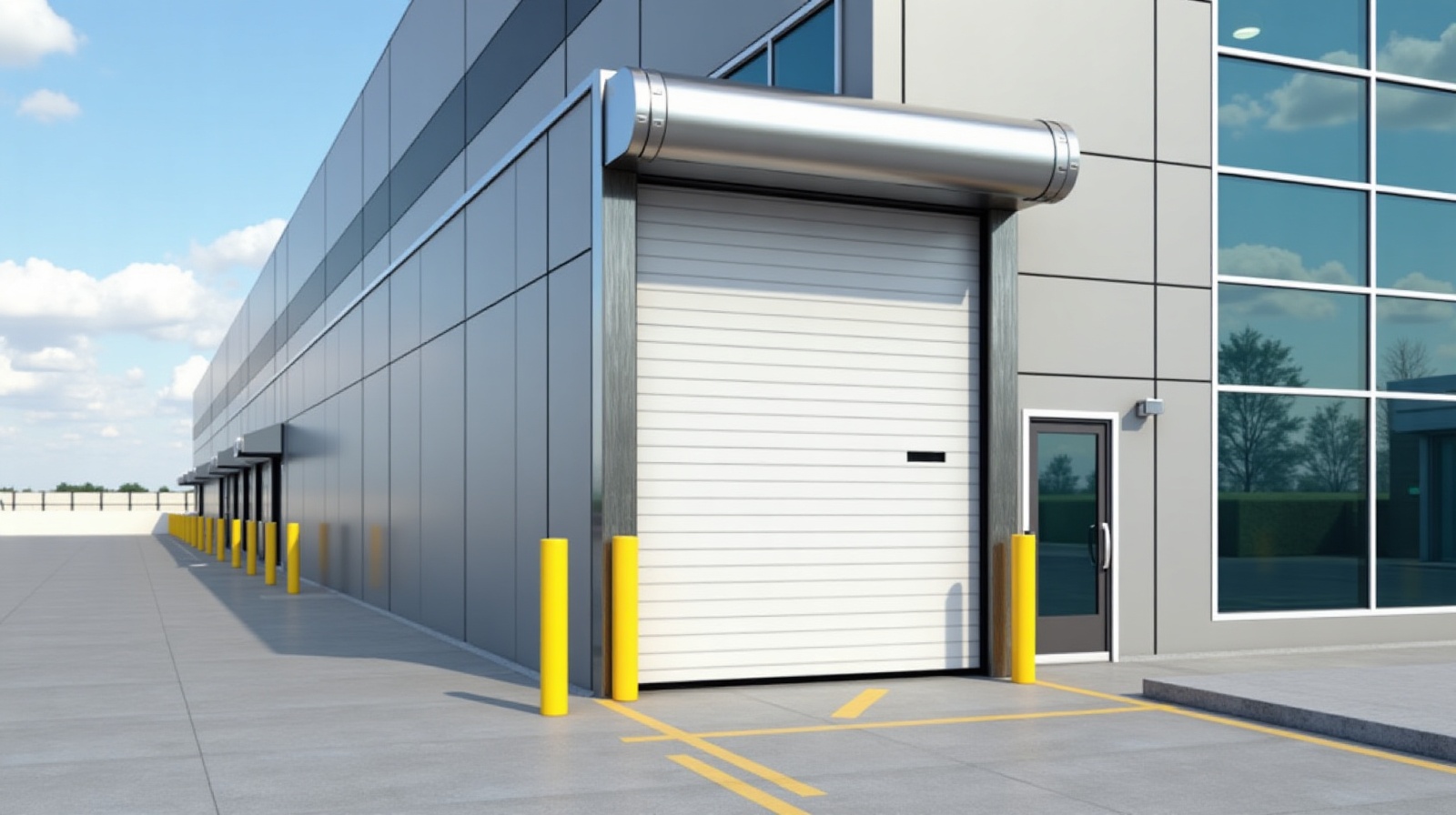
A high-speed door for a vehicle wash closes the entry and exit of tunnel car washes, rollover washes, truck and bus washes and vehicle wash halls in depots. Depending on type and size, it opens at around 1.5 to 2.5 m/s, closes immediately after each passage and operates in one of the harshest environments for an industrial door: splash water, steam, cleaning chemicals, de-icing salt and frost all act at the same time. Doors for wash facilities are therefore external doors with additional equipment for wet areas, based on the outdoor high-speed door.
Car washes come in two basic forms. In a rollover wash, the vehicle stands still while a gantry with brushes, high-pressure jets and dryer moves over it; the door remains closed during the programme and keeps spray mist and blower noise inside. In a tunnel wash, a conveyor pulls vehicles through a tunnel in close succession. The entry and exit doors must open in step with the system, because a vehicle on the conveyor cannot stop, and since every vehicle passes two doors, busy sites quickly reach high cycle rates.
Truck and bus washes are larger and rougher. Articulated trucks of up to 16.5 m and road trains and articulated buses of up to 18.75 m in length need openings of typically 4 to 5 m in width and height, and the truck wash door has to stay open until the last part of the vehicle has cleared the opening. Add to this heavy dirt, strong pre-soak agents and, in winter, brine from wheel arches and bodies. Commercial vehicle washes are often drive-through halls with a door at each end.
Vehicle and depot wash halls are found at public transport operators, hauliers, waste management companies, municipal depots and fleet operators. The wash hall often adjoins a workshop or parking hall. Two doors are then needed: a weather-resistant wash hall door to the outside and an internal door that keeps spray mist and moisture away from the workshop, store and parked vehicles. How external openings at loading bays, access roads and vehicle halls are designed in general is shown in the overview high-speed doors for loading bays and access points.
Requirements in this application
- Corrosion-resistant frames, guides and fixings that withstand water, cleaning chemicals and chlorides
- Chemical- and UV-resistant curtain that stays flexible when wet, dry and cold
- Drive, control unit and sensors in a design protected against splash water
- Frost-proof operation without ice on curtain, guides and bottom seal
- Activation that detects vehicles and does not respond to water jets, foam or brushes
- Signal exchange with the wash system controller for entry, programme start and exit
- Clear dimensions for the largest vehicle including mirrors, bodies and roof loads
Typical challenges at the door opening
The biggest problem for doors in wash facilities is corrosion. Splash water and spray mist keep all components permanently damp, and alkaline pre-soak agents and acidic wheel cleaners attack coatings – in commercial vehicle washes often one after the other. In winter, vehicles bring in chloride-laden brine, in particularly high concentrations at depots with gritting vehicles. Chlorides are especially aggressive to metals: they attack the zinc layer of galvanised parts and can trigger localised corrosion even on standard stainless steel, known as pitting. Critical points are screws, cut edges, crevices and contact points between dissimilar metals where moisture remains.
The second group of problems concerns sensors, safety and winter. Steam, mist and foam interfere with optical sensors: a light curtain interrupted by spray mist reports the opening as occupied, the door stays open and the hall cools down. A badly adjusted radar opens for water jets or a moving gantry. Collisions threaten on entry if the door in a tunnel wash opens too late or closes too early behind a long vehicle. In frost, water freezes on the curtain, in the guides and at the bottom seal, especially after the last wash of the day. Cold also stiffens the curtain and slows lubricants and drives, so a vehicle wash door has to be specified for winter operation from the outset.
The right solution
The foundation is a consistently corrosion-resistant construction. Frames, guides, barrel cover and screws are made of stainless steel grade 1.4301 (AISI 304), or of molybdenum-alloyed AISI 316 where chloride exposure is high; for less exposed areas, a duplex system of hot-dip galvanising and powder coating is an option. The curtain of coated polyester fabric must be resistant to the cleaning chemicals used, which can be checked against the safety data sheets of the wash products. Motor, limit switches and sensors need a design protected against water jets, with sealed cable entries; the control unit is best placed in a dry adjoining room or in a sealed enclosure outside the spray zone.
In terms of door type, a wind-resistant outdoor high-speed door with a PVC curtain suits most wash facilities. Integrated wind bars keep the curtain in its guide against wind from outside and against the airflow of the drying blowers. For large openings, high wind loads or heated halls, a spiral door is an alternative: its aluminium slats run without contact in the spiral, wet slats do not lie on top of each other, and insulated versions improve thermal insulation. For a tempered wash hall, an insulated high-speed door is also an option. Between wash hall and workshop, an internal door with PVC curtain and stainless steel frame that holds back spray mist is usually sufficient.
Activation is preferably by induction loop, which responds only to the metal mass of vehicles and ignores water, foam and steam, or directly by the wash system controller: it requests the door, waits for the end-position-open feedback and only releases the programme once the door is closed again. For safe entry, traffic lights show when the next vehicle may move forward, a light curtain in the guides also detects drawbars and trailers, and the safety edge stops the door on contact. In tunnel washes, the conveyor should stop if the door does not report open in time. Your installer sets up these interlocks during commissioning, using the documentation supplied with the door.
| Requirement | Solution at the door | Benefit |
|---|---|---|
| Splash water and cleaning chemicals | Frames and guides in AISI 304 stainless steel, chemical-resistant curtain | No rust, no embrittlement of the curtain |
| De-icing salt and chlorides | AISI 316 stainless steel or duplex coating, stainless steel screws | No pitting at edges, crevices and joints |
| Moisture at drive and control unit | Enclosures protected against water jets, control unit outside the spray zone | Fewer electrical faults and failures |
| Frost and ice | Heated guides, frost-resistant bottom seal, channel in front of the door | Door does not freeze, even after the last wash |
| Spray mist interferes with sensors | Induction loop, signal from the wash system, adapted light curtain | No false triggering, no permanent occupancy due to mist |
| Cycle operation of the tunnel wash | Coupling with the system controller with end-position-open feedback | Vehicles pass entry and exit without stopping |
| Long trucks and articulated buses | Light curtain and occupancy detection up to the rear of the vehicle | Door only closes behind the last part of the vehicle |
Configure a high-speed door for vehicle wash facilities
Configure nowBenefits for your operation
- Spray mist, heat and blower noise stay in the wash hall
- Short opening times reduce the heating load and protect wash equipment and pipes from frost
- No queues at the entrance, even with vehicles in close succession
- Longer service life thanks to corrosion-resistant components
- Fewer faults due to false triggering and iced-up guides
- Drier traffic areas and less ice in front of the door
- Safe entry thanks to traffic lights, light curtain and safety edge
Planning and installation
The door size follows from the largest vehicle using the facility. Under the EU rules for international road transport, trucks are generally limited to 4.00 m in height and 2.55 m in width, refrigerated vehicles to 2.60 m; mirrors, bodies and roof loads come on top, and some countries allow taller vehicles nationally. For truck and bus washes, a clear height of typically 4.50 to 5.00 m and widths from about 4.00 m are therefore planned so that drivers do not have to aim precisely. Car washes usually manage with around 3 × 3 m; vans and motorhomes need more. Above the opening, the barrel needs headroom, and the guides need side room, as explained on the sizes page.
In wet areas, detailed planning is decisive. The door is best placed inside behind the reveal or under a canopy so that barrel and drive are not directly exposed to rain; for installation in front of the façade, a weather hood over the barrel is needed. The hall floor falls towards the drainage channel, and a second channel in front of the door prevents standing water at the bottom seal. Induction loops are milled into the surface and sealed, with clearance from channels and reinforcement. Power and control cables to the wash system, traffic lights and sensors should be laid before installation. The door is delivered direct from the factory and installed by your installer; what the delivery includes is described under delivery and installation.
For winter: a door that closes wet in the evening can be frozen in the morning. Heated guides, a heated or frost-resistant bottom seal, a curtain that stays flexible in the cold and a hall kept frost-free at night are the most effective measures. It is equally important that drips from vehicles and curtain do not collect in the closing area. In existing buildings, a high-speed door can usually be fitted in the existing opening or added behind an existing roller shutter.
Regulations and standards
Doors at vehicle wash facilities are power-operated doors within the meaning of the product standard EN 13241; the declaration of performance states, among other things, the wind resistance class to EN 12424. Safety in use is governed by EN 12453, with safety edges, limited closing forces and non-contact monitoring of the opening. Inspection and maintenance follow the manufacturer's instructions and the national workplace regulations in the country of installation and are carried out by your installer or maintenance provider; with high cycle rates and an aggressive environment, shorter maintenance intervals make sense.
Because electrics and water meet, the IP rating of the enclosures and regular inspection of electrical installations and equipment under the applicable national regulations are particularly important. If the door is coupled with the wash system, the interface must be designed so that the safety functions of both machines are maintained; the basis is the operator's risk assessment. If staff regularly walk through the vehicle opening, for example for pre-washing, a separate pedestrian door should generally be provided.
Cost-effectiveness
At a vehicle wash, a high-speed door pays off through energy, throughput and availability. Wash halls are kept frost-free or warm in winter, and every minute the door stands open exchanges warm, humid hall air for cold outside air. A sectional door 4.5 m high at around 0.2 m/s needs more than 20 seconds to open and just as long to close, a high-speed door at 2 m/s just over 2 seconds. With many passages, this adds up to much less air exchange and a lower heating load.
At tunnel washes, vehicle spacing determines capacity, and a door that slows the cycle costs revenue. Corroded guides, iced-up curtains or failed sensors often shut the facility down precisely when many vehicles want to wash off salt in winter. Corrosion-resistant components increase the purchase cost but extend service life and reduce follow-up costs. What determines the price is explained on the high-speed door cost page; to request a quote, put your door together in the outdoor door configurator.
Recommended equipment
Typical sizes in this application: 3,000 × 3,000 mm (cars) to 5,000 × 5,000 mm (trucks and buses). All common sizes are listed under High-speed door sizes.
Checklist for your enquiry
- Facility type: rollover wash, tunnel wash, truck or bus wash, depot wash hall
- Vehicles: maximum height, width including mirrors and length, e.g. articulated truck, articulated bus, van or motorhome
- Opening and installation space: clear width and height, headroom, side room, installation inside or in front of the façade
- Media: cleaning agents used, with safety data sheets, high-pressure or hot water near the door, de-icing salt in winter
- Climate: heated or frost-free hall, location and wind exposure of the door
- Cycle: vehicles per hour at peak, drive-through layout or entry and exit through the same door
- Control: activation, traffic lights, signals to and from the wash system controller, payment or access system
- Existing situation: existing door, drainage and power supply; then put your door together in the outdoor door configurator
Suitable door types
Frequently asked questions
Which door is suitable for a car wash?
A weather-resistant high-speed door with stainless steel frame and guides, a chemical-resistant curtain and a control unit protected against splash water. It opens in seconds, closes immediately after each passage and keeps spray mist, heat and noise in the hall. For large openings or high wind loads, a spiral door is an alternative.
What kind of door does a truck wash need?
A truck or bus wash needs a large, wind-resistant high-speed door, typically 4 to 5 m wide and 4.5 to 5 m high. The door must stay open until even an 18.75 m road train or articulated bus has passed completely; light curtains and occupancy detection ensure this. Because of brine and pre-soak agents, frames and fixings should be made of stainless steel.
Will a door rust in a wash hall?
Painted or merely galvanised steel corrodes in wash halls over time, because splash water, cleaning chemicals and chlorides from de-icing salt attack the protective layer. Doors for wash halls therefore have frames, guides and screws in AISI 304 stainless steel, or AISI 316 where salt exposure is high. The higher grade pays off mainly at truck washes, depots with gritting vehicles and sites with heavy winter use.
How does a vehicle wash door open automatically?
Usually via an induction loop in the floor that responds only to vehicles, or via a signal from the wash system controller, for example when the programme ends and the exit is clear. Radar is possible but must be set so that water jets, foam or the moving gantry do not trigger an opening. Traffic light control shows the driver when to drive in.
Does a rollover wash need a different door from a tunnel wash?
The door type is similar; the control differs. At a rollover wash, the door opens for entry and exit and remains closed during the wash. In a tunnel wash, the vehicle keeps moving on the conveyor, so the door must open in step with the system and report end position open before the vehicle reaches the opening.
Does a high-speed door at a car wash freeze in winter?
A door designed for wet and outdoor areas works in frost if guides and bottom seal are heated or frost-resistant and no water stands in the closing area. A drainage channel in front of the door, a cold-flexible curtain and a hall that stays frost-free at night are decisive.
Is a high-speed door at a car wash loud?
The door itself is usually quieter than the wash equipment. A frequency inverter starts the curtain gently and slows it down before the end position, and a spiral door runs particularly quietly. More important is the effect of the closed door: it keeps blower and high-pressure noise in the hall during washing, which helps at sites close to residential areas.
How often does a door in a vehicle wash need maintenance?
Inspection and maintenance follow the manufacturer's instructions and the national workplace regulations in the country of installation. Because of moisture, chemicals and high cycle rates, shorter maintenance intervals make sense at wash facilities, with a focus on seals, guides, sensors and corrosion at fixings. The work is carried out by your installer or a local maintenance provider.
Configure your high-speed door and request a quote
Choose size, curtain, drive and accessories in a few steps. You receive a non-binding quotation.